Collars, Cuts and Fabrics: How to Spec a Rugby Shirt for Your Club
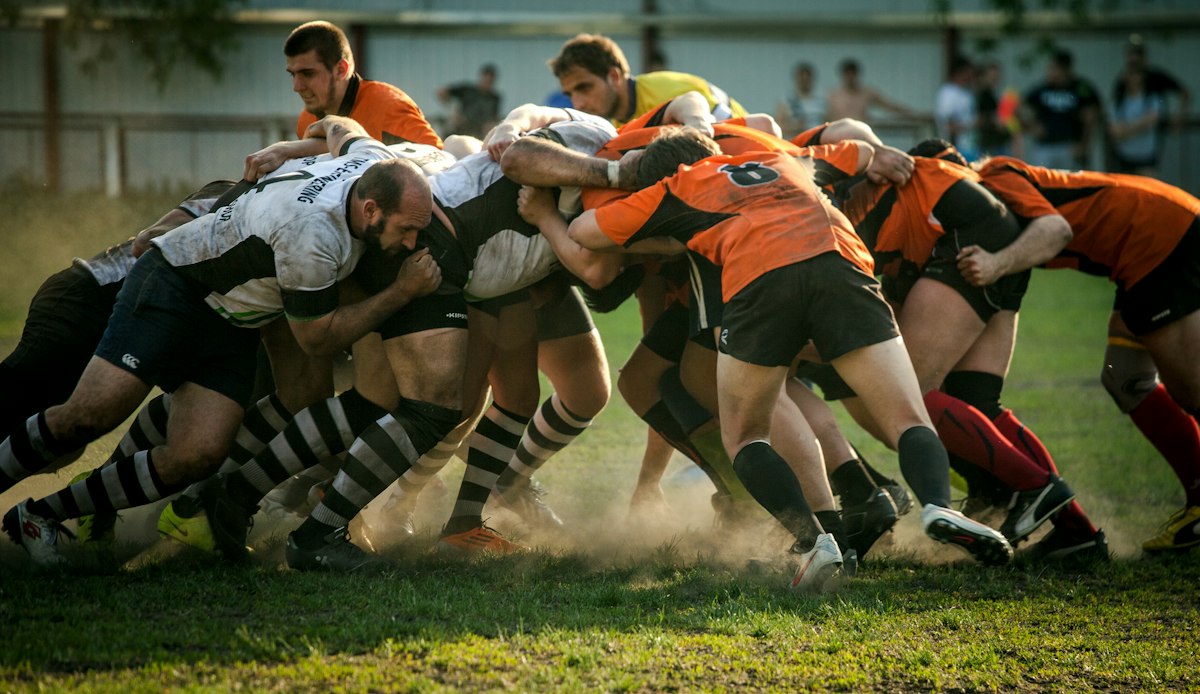
Rugby shirts have changed a great deal. The heavy cotton jersey with a stiff collar has largely given way to close-fitting technical shirts, yet many clubs still love the traditional look. When a committee sits down to order custom rugby shirts, it has more choices than ever, and each one affects how the shirt performs in contact.
Quick answer: Decide on four things: the collar, the cut, the fabric and the seams. A low-profile collar and a close cut make a shirt harder to grab. A strong polyester knit with some stretch handles tackles and scrums. Reinforced seams keep the shirt together through a season of contact.
Which collar should a club choose?
The classic rugby collar is a fold-down woven collar with a button placket. It looks smart and suits clubhouse and supporter wear. On the pitch it gives an opponent something to hold, which is why most modern match shirts have moved away from it.
The common match options today are a low stand-up collar, sometimes called a mandarin style, a simple crew neck and a shallow V-neck with a reinforced insert. All three sit close to the neck. Some clubs keep a small fold-down collar in a soft fabric as a nod to tradition. The choice is partly about heritage and partly about how the shirt will be used.
Tight fit or classic fit?
A tight, body-hugging cut gives defenders less loose fabric to grab. It is the norm at higher levels and popular with backs at every level. A classic fit is looser through the body and sleeves. Many forwards, veterans and social players find it more comfortable, and it is more forgiving across different body shapes.
Clubs do not always have to pick one. Some manufacturers can produce the same design in two cuts so that each player chooses. If you do this, record the cut next to the size for every player, because a medium in a tight fit and a medium in a classic fit are very different garments.
What fabric stands up to rugby?
Rugby asks more of a fabric than most sports. The shirt is pulled, stretched and dragged across the ground. Look for a dense polyester knit with good tear resistance and a degree of stretch, often achieved with a small amount of elastane. The fabric should recover its shape after being pulled.
Weight matters too. A slightly heavier fabric is tougher and suits forwards and cold, wet conditions. A lighter fabric is cooler for sevens and summer rugby. Ask what options exist and, if possible, handle a sample and pull it firmly to see how it behaves.
Which construction details matter most?
Strong fabric is no use if the seams fail. When you review a sample or a specification, look for these details:
- Reinforced stitching at the shoulders, underarms and side seams
- A strengthened neckline that will not stretch out of shape
- Flat seams that do not rub during long matches
- Optional grip print or textured panels on the chest to help with ball handling
- Sleeve ends that sit close to the arm without digging in
Sublimated decoration is well suited to rugby because the crest, sponsor and number are dyed into the fabric. There is nothing on the surface to crack, peel or scrape off in a tackle.
How should the specification be written down?
Put the final choices in one short document: collar type, cut or cuts, fabric, colours with references, crest and sponsor positions, number style and the size list. Share it with the manufacturer and ask for a proof that reflects every point.
A written specification is valuable next season as well. When new players need shirts, the club can reorder against the same document and receive garments that match the originals.
Frequently asked questions
Are cotton rugby shirts still used for matches?
Rarely. Cotton holds water and becomes heavy. It remains popular for supporter and leisure shirts.
Do forwards and backs need different shirts?
Not necessarily. Some clubs offer two cuts in the same design so each player can choose.
Can shorts and socks be made to match?
Yes. Ordering them together keeps the colours consistent across the whole kit.
Key takeaways
- Collar, cut, fabric and seams are the four decisions that define a rugby shirt
- Close collars and tight cuts are harder to grab in contact
- Choose a dense, stretchy polyester knit and reinforced seams
- Write the specification down so reorders match
Final thoughts
A rugby shirt should suit the way your club plays and the players who wear it. Make the four key decisions deliberately and confirm them on a proof before production. Stitch Next, a sportswear manufacturer in Sialkot, Pakistan, produces sublimated teamwear to order, and its rugby page shows the range of custom rugby shirts available to clubs.